
Uncategorized
The Importance of Peptide Purity Testing: Ensuring Quality and Efficacy
May
In the rapidly evolving fields of biotechnology, medicine, and wellness research, synthetic peptides have taken center stage. From targeted therapies to advanced metabolic support, the integrity of these compounds dictates the success of your work. However, the quality of these compounds can vary significantly depending on synthesis and manufacturing methods.
This is where peptide purity testing becomes a critical step in the research and development process.
But what exactly does purity testing involve, and why is it the gold standard for ensuring reliable outcomes? Let’s dive into the science, methodologies, and specifications behind peptide analysis.
What is Peptide Purity?
When peptides are synthesized in a laboratory, the process involves linking amino acids together in a specific sequence. As the chain grows, the reaction is not always 100% efficient. This can result in the formation of byproducts, incomplete sequences (truncated chains), and impurities such as residual solvents, salts, or water.
Peptide purity refers to the percentage of the target peptide relative to the total mass of the sample. For research and clinical applications, a purity level of 98% or higher is generally considered the benchmark for reliable and reproducible results.
Core Methods of Peptide Purity Testing
To guarantee the accuracy of a peptide batch, laboratories rely on a combination of analytical techniques. The most common methods used in peptide purity testing include:
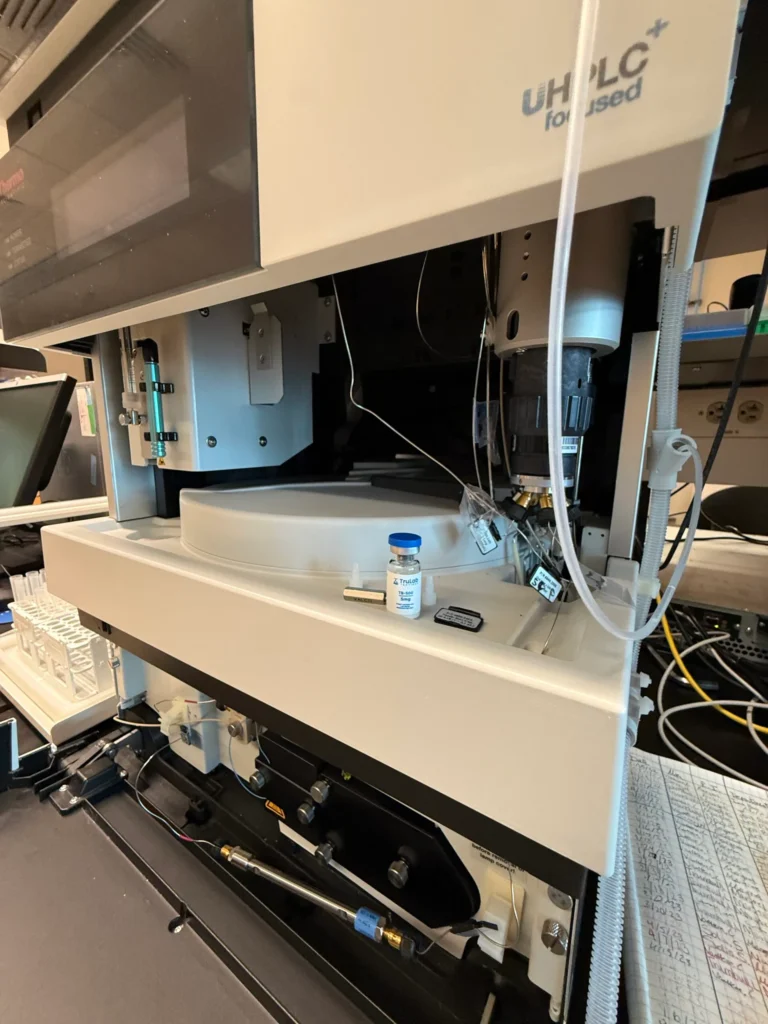
- High-Performance Liquid Chromatography (HPLC): This is the primary method used to determine the purity of a peptide. The sample is pushed through a column, separating the main peptide from impurities based on their chemical properties. The resulting chromatogram provides a clear percentage breakdown of the sample’s purity.
- Mass Spectrometry (MS): While HPLC measures how much of the substance is present, Mass Spectrometry measures the molecular weight of the compound. This confirms the identity and sequence of the peptide, ensuring that the synthesized chain matches the target sequence exactly.
- Amino Acid Analysis (AAA): This test breaks down the peptide into its individual amino acids to verify the precise amino acid composition and ratio, adding an extra layer of structural validation.
Why Purity Testing Matters
Relying on untested or low-purity peptides can severely compromise your research or therapeutic protocols. Here is why rigorous testing is essential:
- Reproducibility: In scientific research, inconsistent purity leads to varying results, making it difficult to replicate experiments.
- Safety: Impurities and residual solvents can trigger unintended immune responses, toxicity, or unpredictable side effects in biological systems.
- Targeted Efficacy: If only 85% of your sample is the active peptide, your dosing calculations will be inaccurate, leading to reduced therapeutic outcomes.
Quick Reference: Specifications
| Analysis Type | Primary Purpose | Standard Target Range |
| HPLC Analysis | Quantifies the relative purity and identifies impurities | $\ge 98\%$ purity |
| Mass Spectrometry | Confirms molecular weight and sequence identity | Matches theoretical mass |
| Peptide Content | Determines the actual peptide salt-to-peptide ratio | Varies (e.g., 80-90% net peptide) |
| Bacterial Endotoxin Test | Ensures safety for biological or in vivo applications | $< 10 \text{ EU/mg}$ |
Understanding the Certificate of Analysis (CoA)
When sourcing peptides, a reliable supplier will always provide a Certificate of Analysis (CoA). The CoA is a formal document that outlines the results of the purity testing.
When reviewing a CoA, make sure to:
- Check the chromatogram: Look for a single, sharp major peak, which indicates a highly pure substance.
- Review the net peptide content: Ensure the document distinguishes between the total weight of the powder and the actual amount of the active peptide (which may include salts or water weight).
- Verify the date of testing: Ensure the analysis is recent and conducted by a verified, independent laboratory.
Conclusion
Peptide purity testing is not just a regulatory formality; it is the foundation of high-quality scientific inquiry. By verifying that your peptides are free from contaminants and accurately composed, you ensure the safety, accuracy, and reliability of your work.
Disclaimer: This blog post is for informational and educational purposes only and does not constitute medical or professional advice. Always consult with a healthcare professional before starting any new dietary supplement, medication, or wellness regimen.
