
Uncategorized
Demystifying Thymosin Beta-4: The Science of Tissue Regeneration and Recovery
May
In the rapidly expanding world of regenerative medicine and biological research, few compounds have generated as much interest as Thymosin Beta-4 (T$\beta$4). Often discussed alongside peptides like BPC-157, Thymosin Beta-4 is celebrated for its remarkable ability to promote tissue healing, reduce inflammation, and facilitate cellular repair.
If you’ve been wondering how this naturally occurring peptide functions, how it differs from TB-500, and where the science stands today, let’s explore the details.
What Is Thymosin Beta-4?
Thymosin Beta-4 is a naturally occurring peptide consisting of 43 amino acids, encoded by the TMSB4X gene. It is found in almost all human and animal cells, with particularly high concentrations located in blood platelets and wound fluid.
Historically isolated from the thymus gland—a small gland responsible for training T-cells to fight infection—this peptide acts as a master regulator of cell structure and motility. After an injury, the body releases Thymosin Beta-4 naturally to protect cells from further damage, minimize scar tissue, and speed up the repair process.
The Mechanism of Action: How It Works
Thymosin Beta-4 is primarily known for its role in regulating actin, a crucial protein in cell structure and movement. Its primary mechanisms include:
- Actin Binding: By binding to actin, it helps cells migrate to the site of an injury to repair damaged tissue.
- Angiogenesis: It promotes the formation of new blood vessels, bringing essential oxygen and nutrients to healing tissues.
- Anti-Inflammatory Properties: It lowers local inflammation and oxidative stress, minimizing tissue degradation.
- Fibrosis Reduction: It decreases the number of myofibroblasts, which reduces the formation of excessive scar tissue or fibrosis.
Research Insight: Studies show that Thymosin Beta-4 plays a critical role during embryonic development, and its levels in newborns can be up to 20 times higher than in adults, underscoring its role in rapid growth and tissue repair.
Key Benefits and Applications
Because of its broad-spectrum regenerative capabilities, Thymosin Beta-4 and its synthetic counterparts are being studied across several therapeutic fields:
- Wound and Tissue Healing: Accelerates the healing of skin, tendons, and ligaments.
- Ocular Health: Clinical trials (often using eye drops containing T$\beta$4, or timbetasin) have shown promise in reducing eye discomfort, dry eye syndrome, and corneal injuries.
- Organ Protection: Preclinical research points to its potential to protect cardiac tissue after a heart attack and reduce liver and kidney fibrosis.
T$\beta$4 vs. TB-500: What’s the Difference?
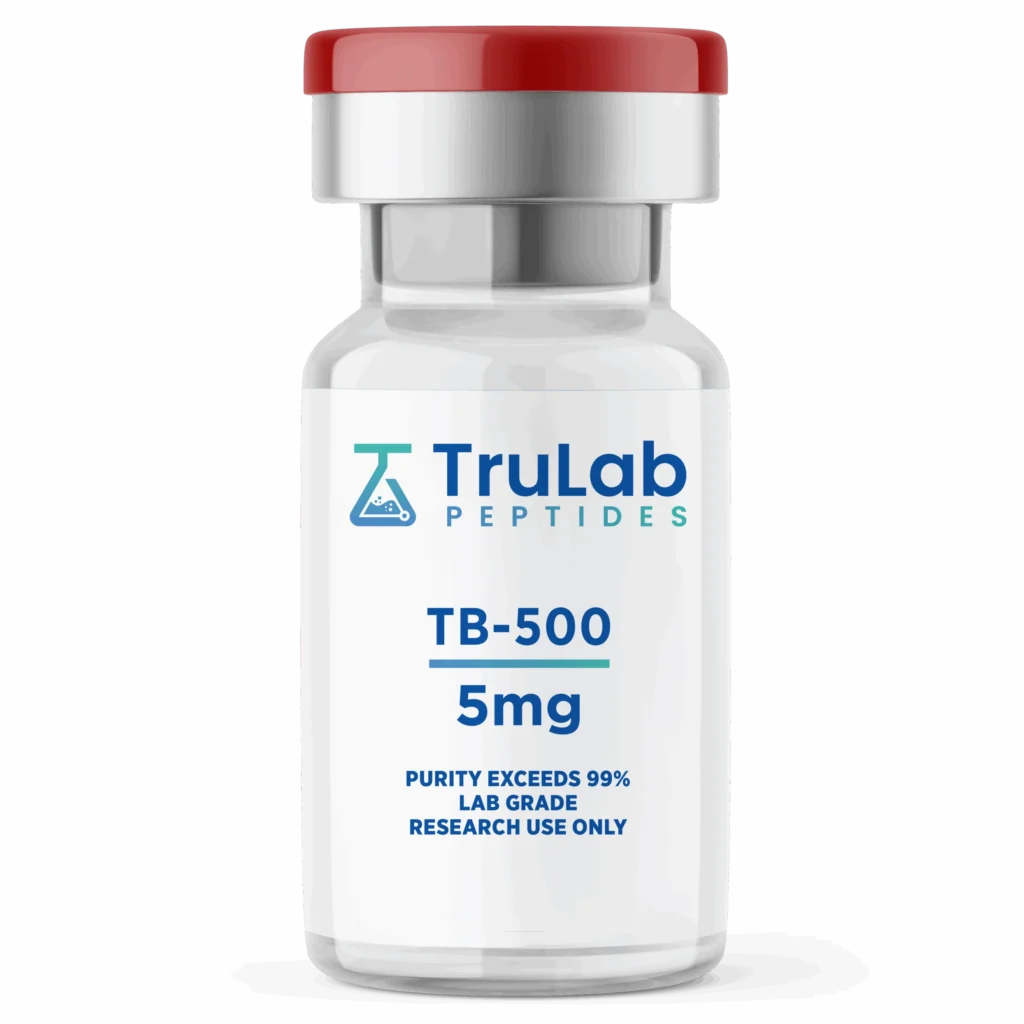
Many researchers confuse Thymosin Beta-4 with TB-500. While related, they have distinct structural differences:
| Term | What It Is | Primary Use |
| Thymosin Beta-4 (T$\beta$4) | The full-length, naturally occurring 43-amino-acid peptide. | General tissue regeneration, research into ocular and dermal wound healing. |
| TB-500 | A synthetic, short 7-amino-acid fragment (sequence LKKTETQ) of the full peptide. | Often utilized for localized tissue recovery and animal research. |
Side Effects and Regulatory Status
As with any investigational compound, it is vital to understand its safety profile and legal status before considering its use:
Common Side Effects
When taken in research trials or reported anecdotally, side effects are generally mild. They can include:
- Mild injection-site reactions (redness or mild swelling)
- Headaches or dizziness
- Mild gastrointestinal symptoms
Current Regulatory Status
- FDA Status: Thymosin Beta-4 is currently investigational. While it has orphan drug designations for specific ophthalmic indications, it is not approved for general human use.
- Athletic Organizations: It is banned by the World Anti-Doping Agency (WADA), both in-competition and out-of-competition, under the S0 (Unapproved Substances) category.
A Holistic Approach to Recovery
While peptides like Thymosin Beta-4 show incredible future potential in regenerative medicine, sustainable recovery involves a multi-faceted approach:
- Targeted Nutrition: Consuming adequate protein and anti-inflammatory foods provides the building blocks for tissue repair.
- Active Recovery: Integrating physical therapy and mobility work supports the structural integrity of healing ligaments and tendons.
- Professional Guidance: Discussing injuries with a medical professional ensures that underlying issues are treated using safe, approved modalities.
Final Thoughts
Thymosin Beta-4 represents a fascinating frontier in peptide science and regenerative biology. Whether used to research wound healing or to protect damaged tissues, it offers a window into how our own bodies recover from trauma. As ongoing clinical trials continue to shed light on its efficacy, the medical community moves one step closer to unlocking its full therapeutic potential.
